
Applications
From arches and fireplaces to exterior walls and outdoor living — what each surface calls for, and which finish to use.
- Arches and ceilingsStonecoat · Arcus PlasterHand-tooled Stonecoat arches; Arcus Plaster on interior accent walls and ceilings.
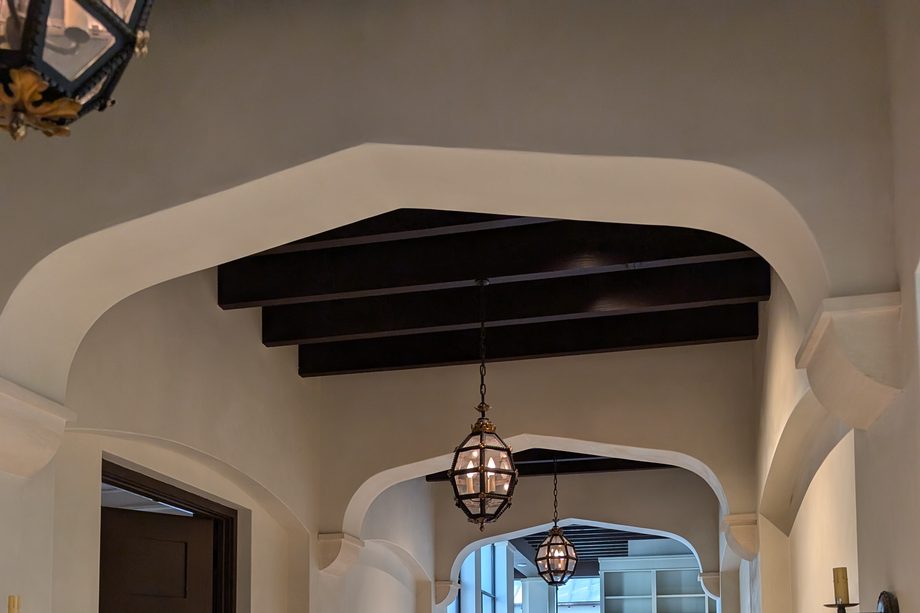
- Architectural shapesStonecoat · Marblecoat · Arcus PlasterCast and pre-coated foam-core shapes, made to simulate natural cut stone.
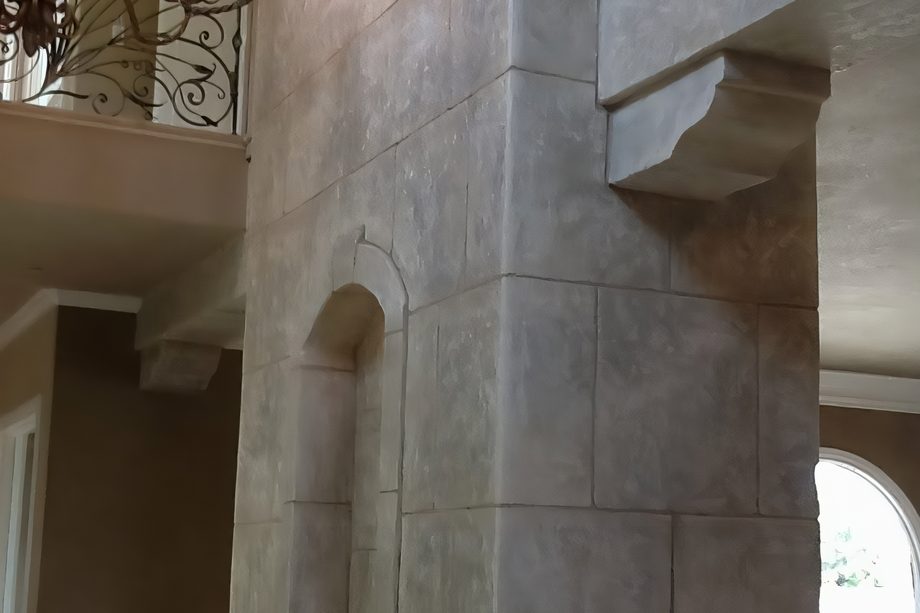
- Columns, cornices and carvingsStonecoat · MarblecoatCustom columns, cornices and carvings in Stonecoat; columns, ornamental panels and mouldings in Marblecoat.
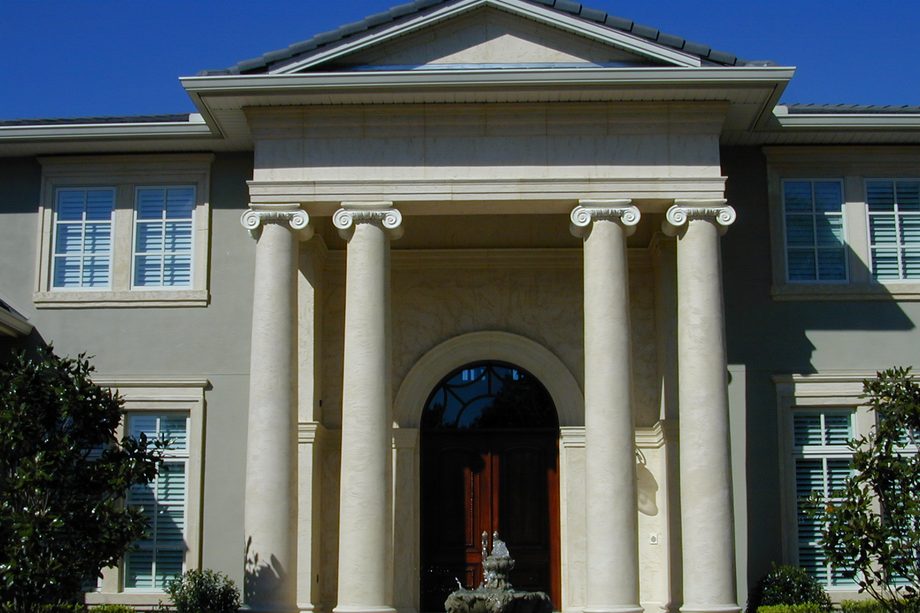
- Doors and windowsStonecoatDoor and window surrounds and quoins, hand-tooled in Stonecoat.
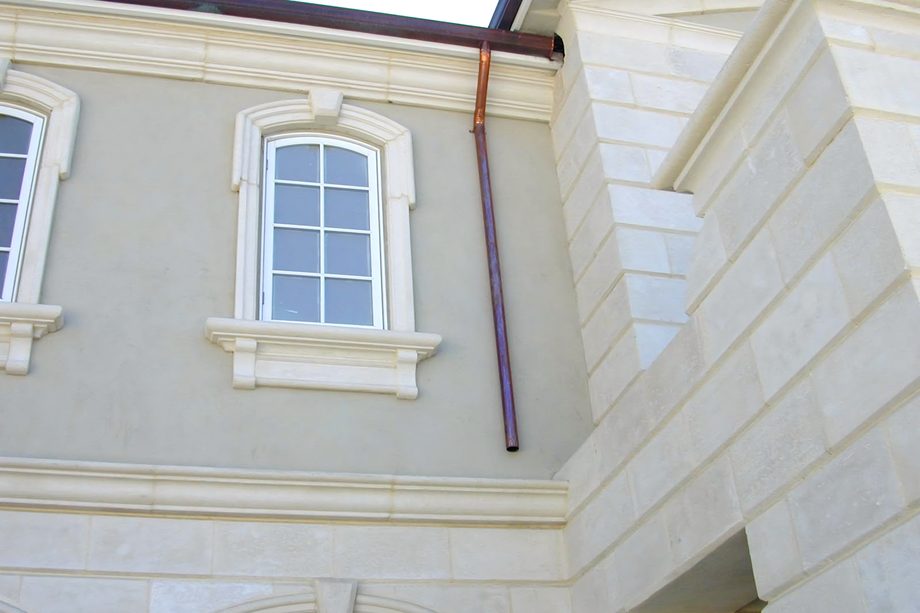
- Entrances and stairsThe surrounds, columns and arches around an entrance, each in its own category below.
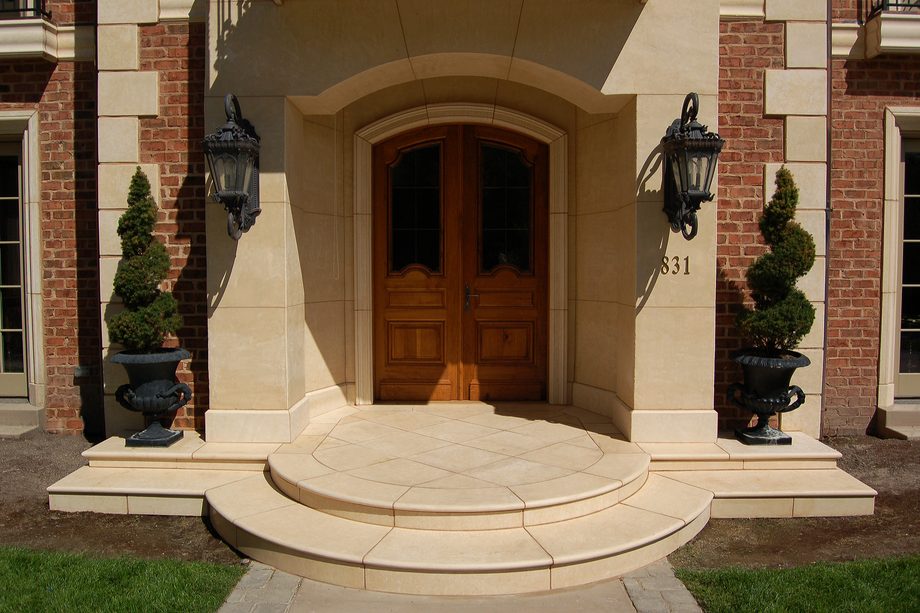
- Exterior wallsAll five bagged finishesEvery bagged finish in the line is made for exterior vertical work.
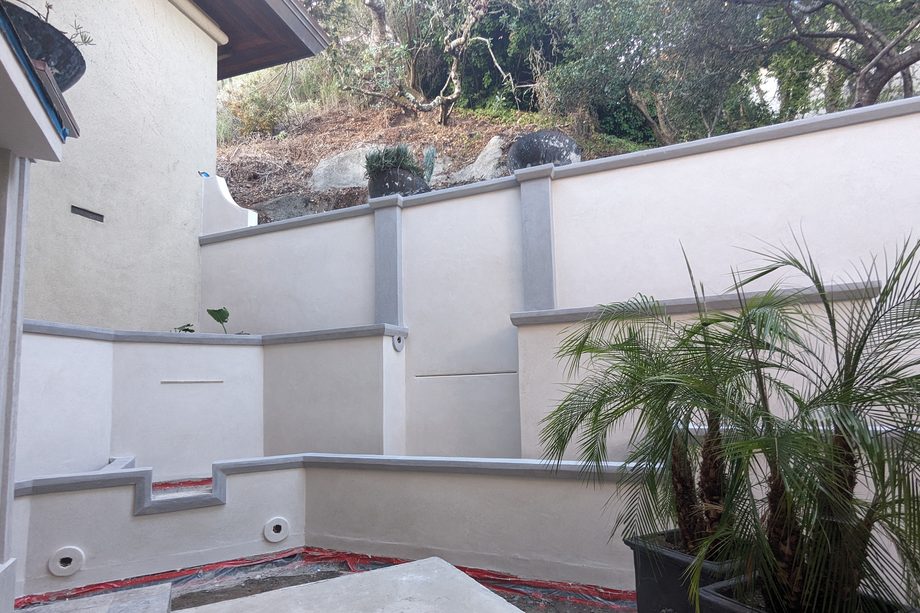
- FireplacesStonecoat · MarblecoatStonecoat is suited to casting fireplaces; Marblecoat lists them among its applications.
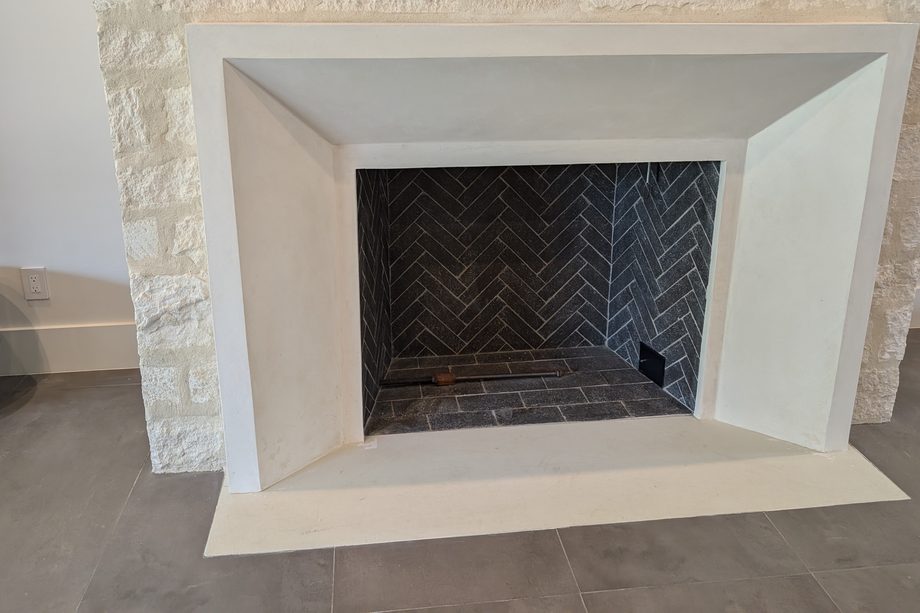
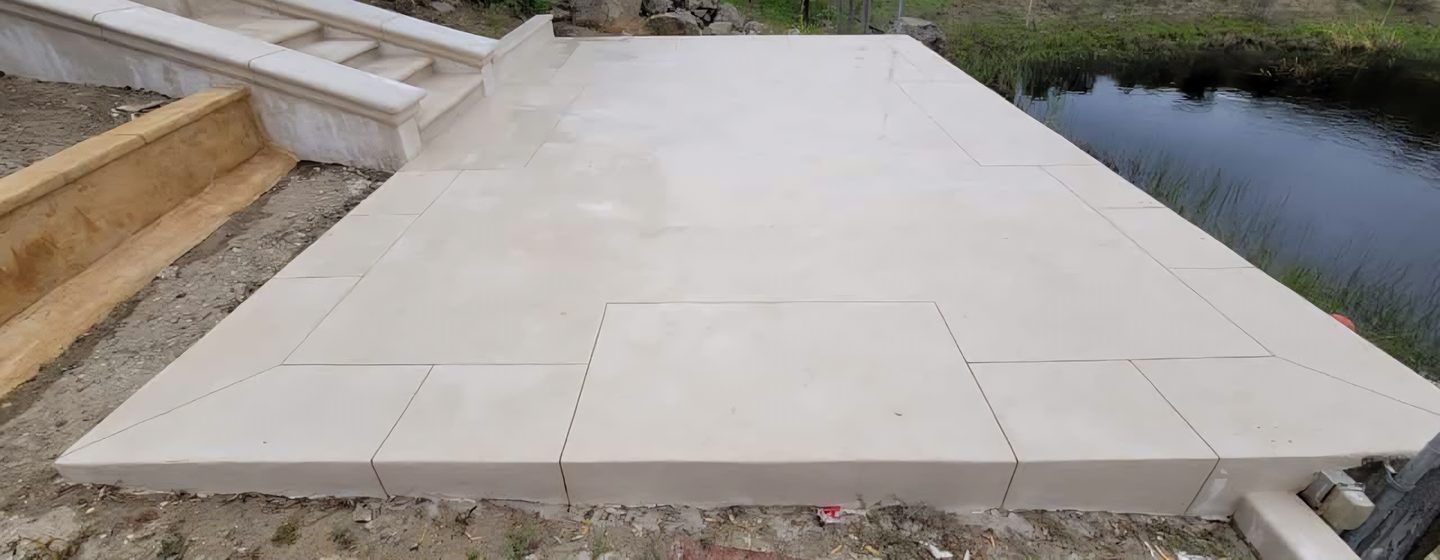
- FloorsStonecoat · MarblecoatStonecoat and Marblecoat are both used for floors.
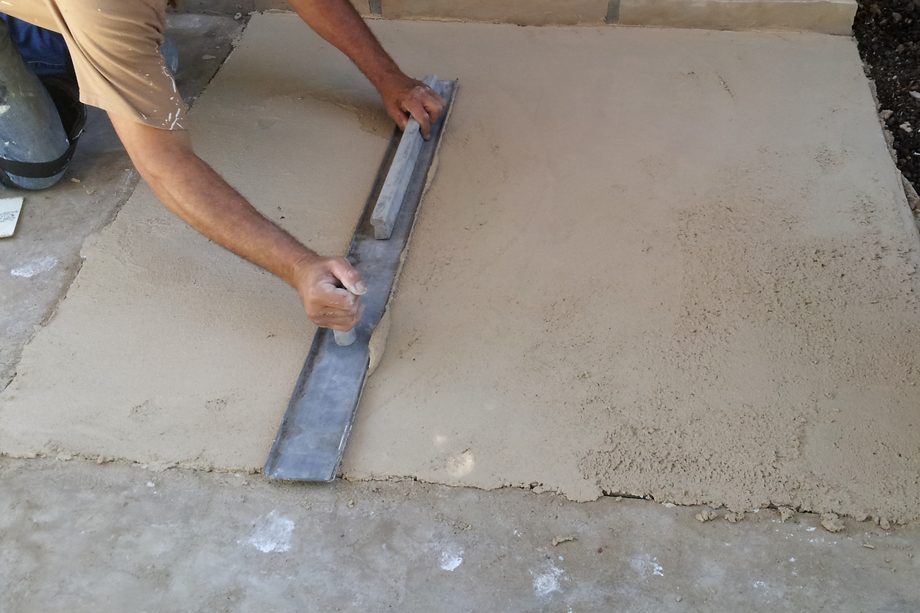
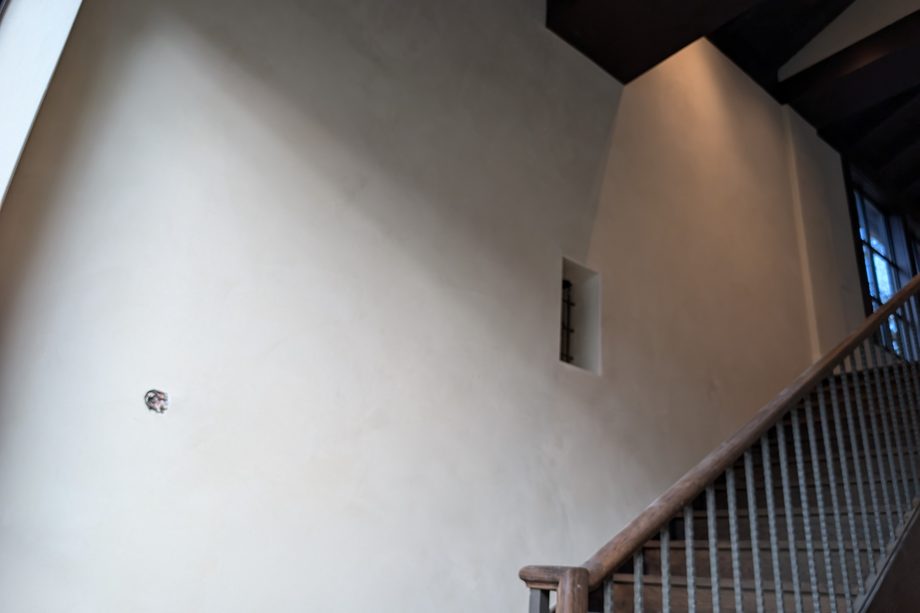
- Interior wallsAll five bagged finishesEvery bagged finish works indoors; Arcus Plaster stays out of wet locations.
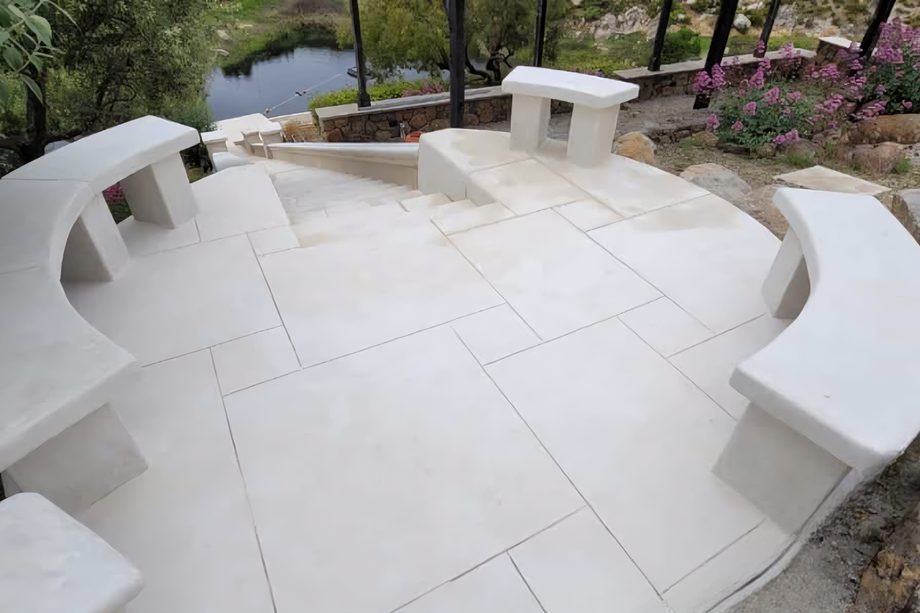
- Outdoor livingStonecoat · MarblecoatPool copings, fountains, barbecue tops, walkways and patios.
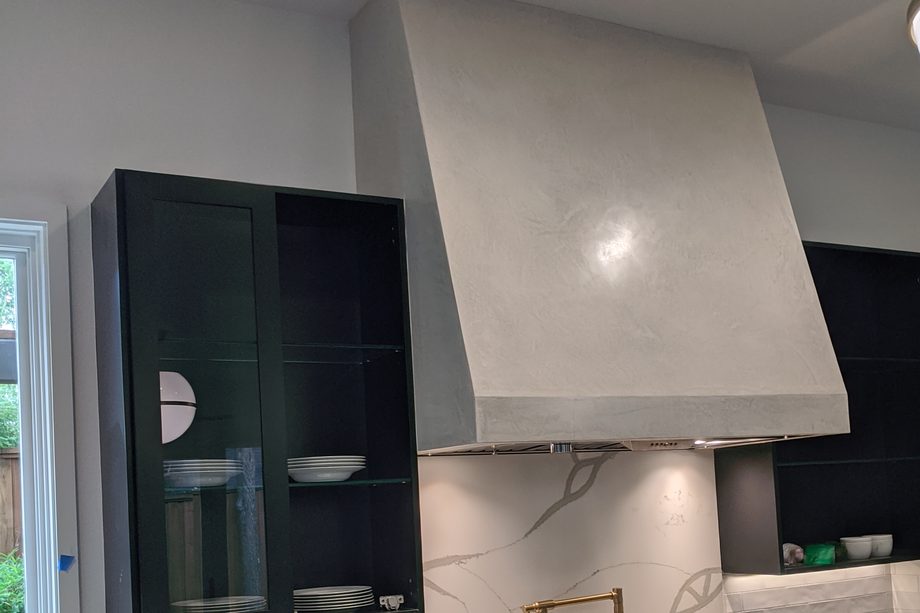
- Range hoodsStonecoatOne of Stonecoat's architectural features.
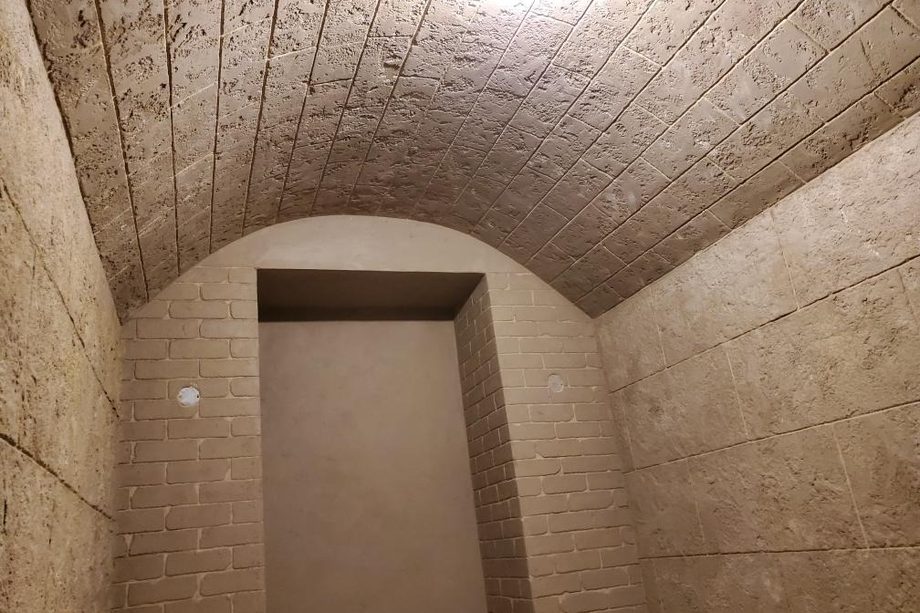
- Wine cellarsStonecoatBarrel vaults and cut-stone walls below ground.
Which finish goes where
Which finish to use on each surface. Every finish in the line is installed exclusively by trained applicators.
| Application | Stonecoat | Marblecoat | Arcus Plaster | Lime Plaster Fine & Medium |
|---|---|---|---|---|
| Arches and ceilings | Yes | — | Yes — ceilings, overhead | — |
| Architectural shapes | Yes | Yes | Coating foam only | — |
| Columns, cornices and carvings | Yes | Columns, mouldings | Foam shapes only | — |
| Doors and windows | Yes | — | — | — |
| Exterior walls | Yes | Yes | Yes | Yes — vertical |
| Fireplaces | Yes | Yes | — | — |
| Floors | Yes | Yes | Not suitable | Not weight-bearing |
| Interior walls | Yes | Yes | Yes | Yes |
| Wet locations (showers, baths) | Yes | Yes | Not suitable | When properly sealed |
| Outdoor living, water features | Yes | Yes | Not suitable | Exterior vertical only |
| Range hoods | Yes | — | — | — |
| Wine cellars | Yes | — | — | — |
- “—” means the finish isn't listed for that use.
- “Not suitable”: Arcus Plaster must not be used on horizontal surfaces subject to vehicular or pedestrian traffic, on water features, or in wet locations such as shower surrounds.
- The lime plasters are for interior and exterior vertical applications only.
Arches and ceilings
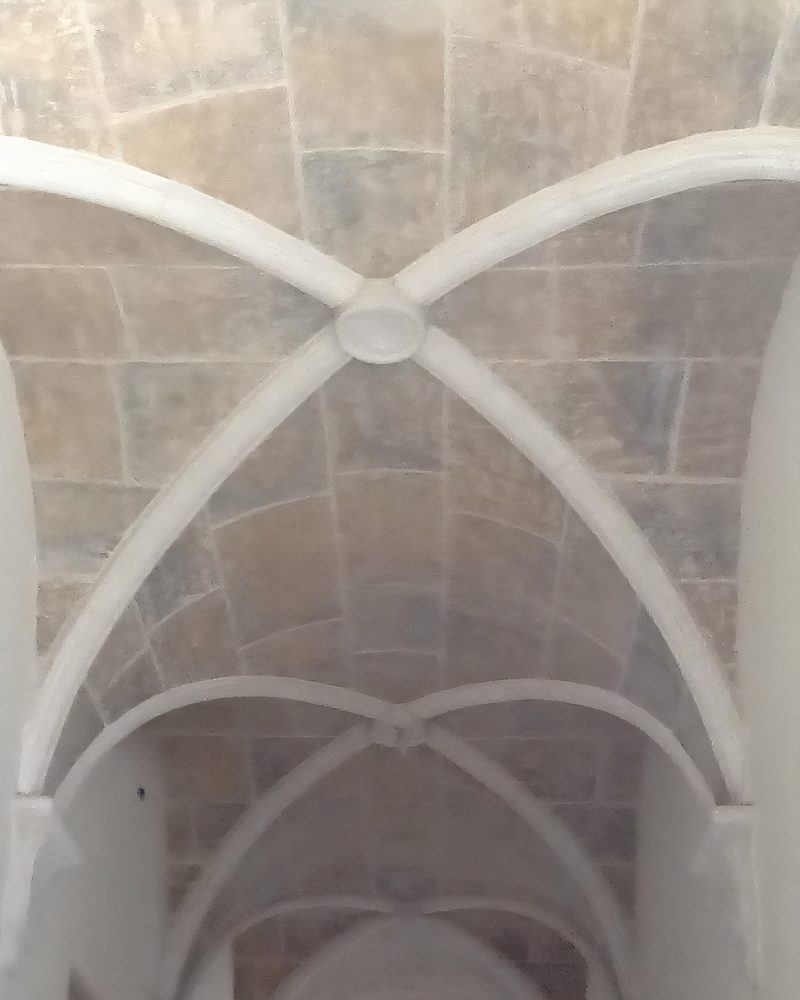
Stonecoat is hand-tooled into arches among its decorative stone elements.
Arcus Plaster is used on interior accent walls and ceilings, and is suitable for interior, exterior, vertical and overhead horizontal applications.
- Finishes
- Stonecoat (arches) · Arcus Plaster (accent walls and ceilings)
- Not listed
- Marblecoat and the lime plasters aren't listed for arches or ceilings.
- Framing
- Ceilings, soffits and arches are framed at 16 inches on centre or less, or with 5/8-inch board if wider.
- Curved work
- Where gypsum board is difficult, such as the curved underside of an arch, the substrate becomes galvanized diamond mesh lath over framing at 4 inches on centre minimum, under a minimum 3/8-inch Portland cement plaster brown coat that completely covers the lath.
Architectural shapes
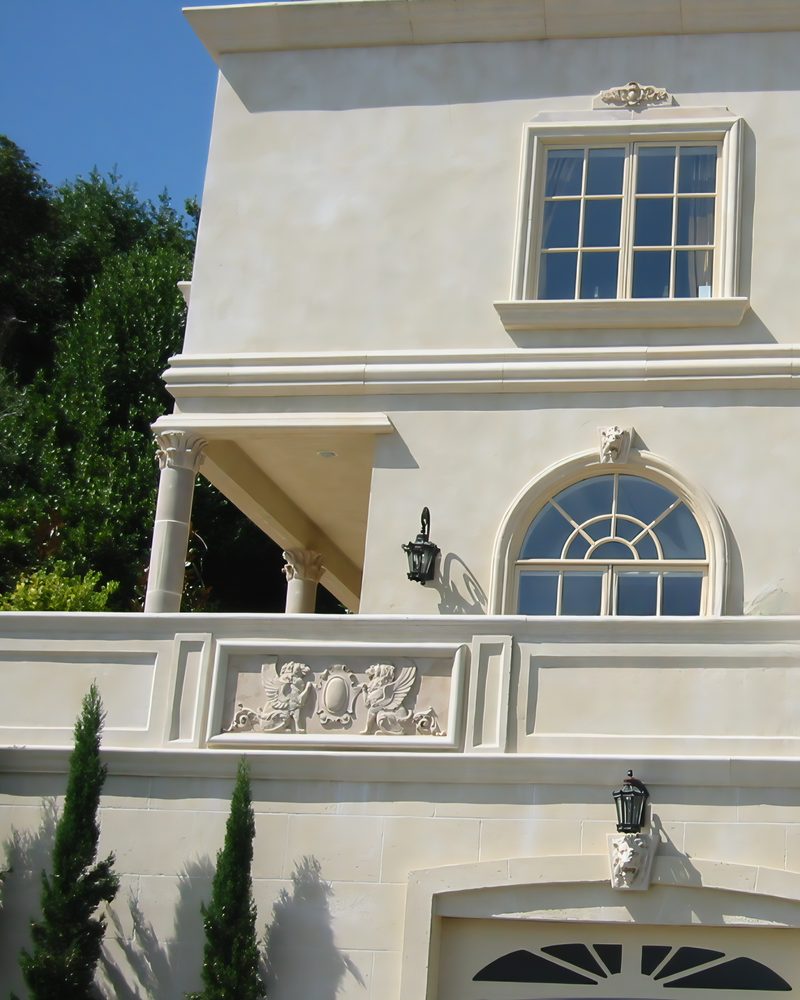
Arcusstone has a dedicated specification for cast and pre-coated EPS foam-core architectural shapes, manufactured to simulate natural cut stone used in masonry applications (CSI Section 06 60 00).
The shapes are extruded over a bonded EPS core, poured into an EPS mould, or cast around EPS cores embedded in a mould. Coating foam shapes and panels is also done on site.
- Written around
- Stonecoat — the foam-shapes specification is written around it.
- Coating foam
- Stonecoat, Arcus Plaster and Marblecoat.
- Cast elements
- Stonecoat and Marblecoat, in EPS, rubber or other moulds.
- Thin pieces
- Pieces and panels averaging one inch or less in thickness are full cast, with no foam core.
- Made by
- Arcusstone Authorized Manufacturers.
Columns, cornices and carvings
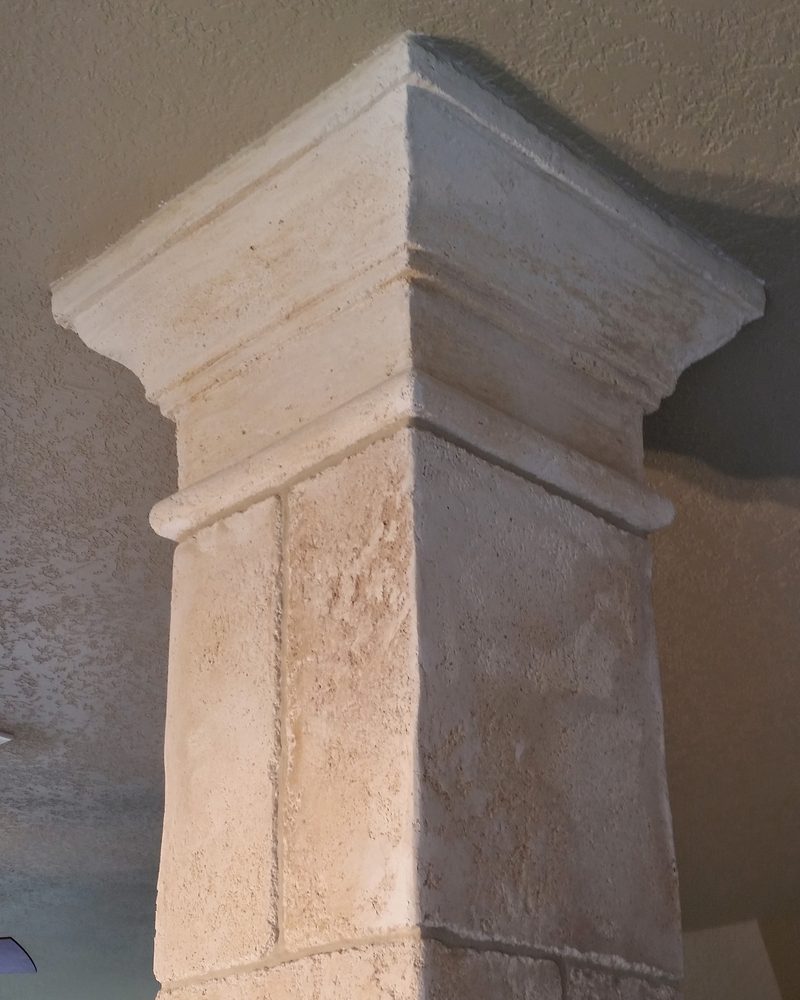
Stonecoat is used for custom columns and is suited to casting columns, fireplaces and shapes. Its range runs to textures, carvings and castings, and it can be applied over any shape or decorative surface.
Marblecoat is often used for accent elements such as columns, ornamental panels and mouldings.
Arcusstone combines its field-applied decorative limestone coatings with carvings and manufactured products to give a project one unified look.
- Finishes
- Stonecoat (columns, cornices, carvings) · Marblecoat (columns, ornamental panels, mouldings)
- Arcus Plaster
- Only by the foam-shape route.
- Long runs
- On long continuous runs of cornice or wainscot moulding it can be more efficient to screed the material onto the foam shapes after they are fastened to the structure.
- Returns
- Pre-forming and coating the left and right returns on sills and cornices gives a more realistic cut-stone appearance than mitre-cutting the ends.
Doors and windows
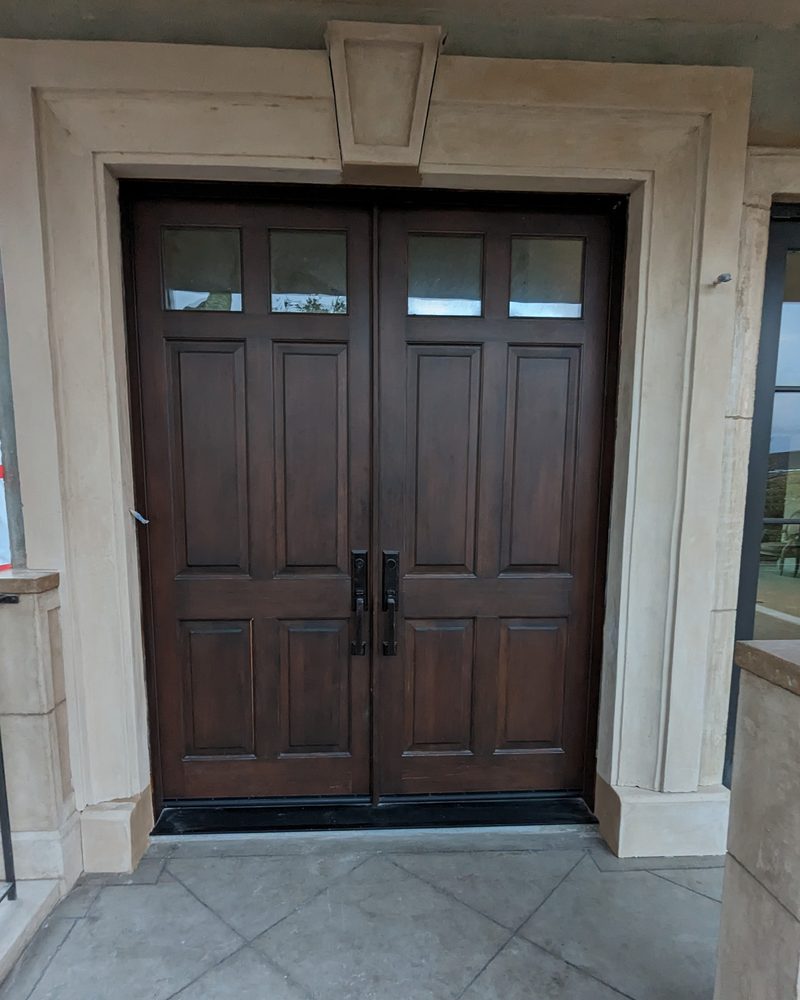
Stonecoat is used for door and window surrounds, and quoins are among the decorative stone elements it is hand-tooled into.
- Finishes
- Stonecoat
- Pre-coated pieces
- Laid out and field-cut to length for sill, head and casing positions, with a dry-cut diamond or masonry blade.
- Openings
- Every door, window, vent and other opening has its finish frame or moulding installed before the coating goes on.
- Corners
- Corners at door and window openings are reinforced with 6 × 12-inch sections of galvanized diamond mesh lath set at 45 degrees.
Entrances and stairs
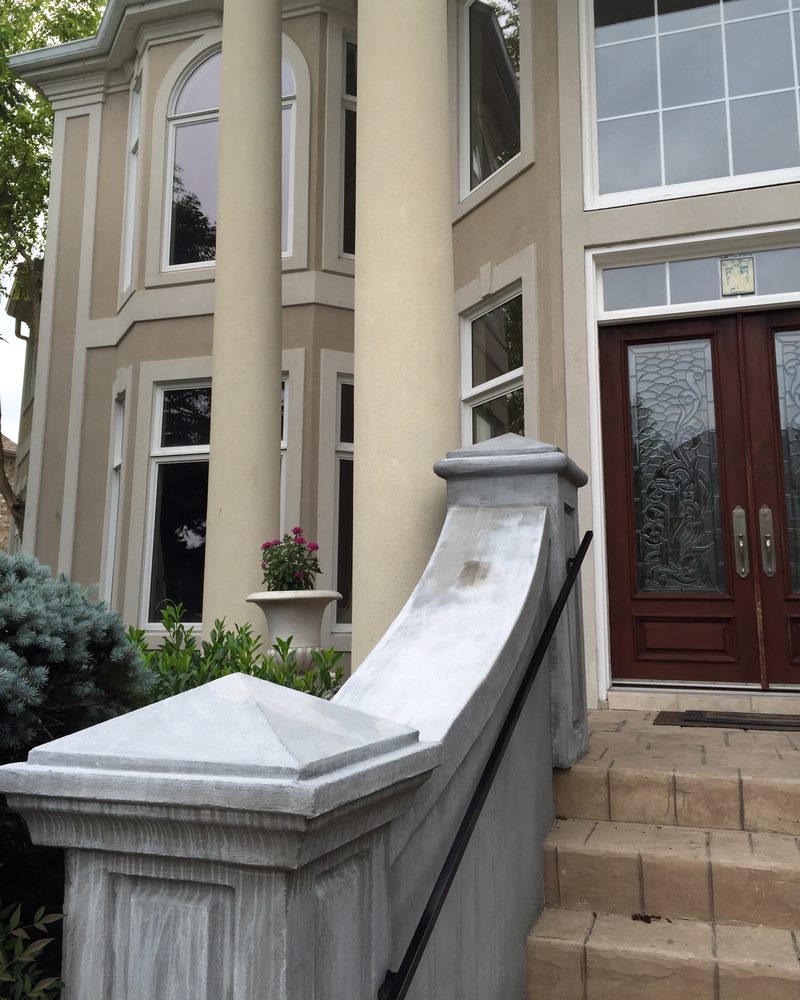
The surrounds, columns and arches around an entrance are covered under their own categories on this page.
- Stair treads
- A tread is horizontal traffic, so Arcus Plaster is not suitable: it must not be used on horizontal surfaces subject to pedestrian traffic.
Exterior walls
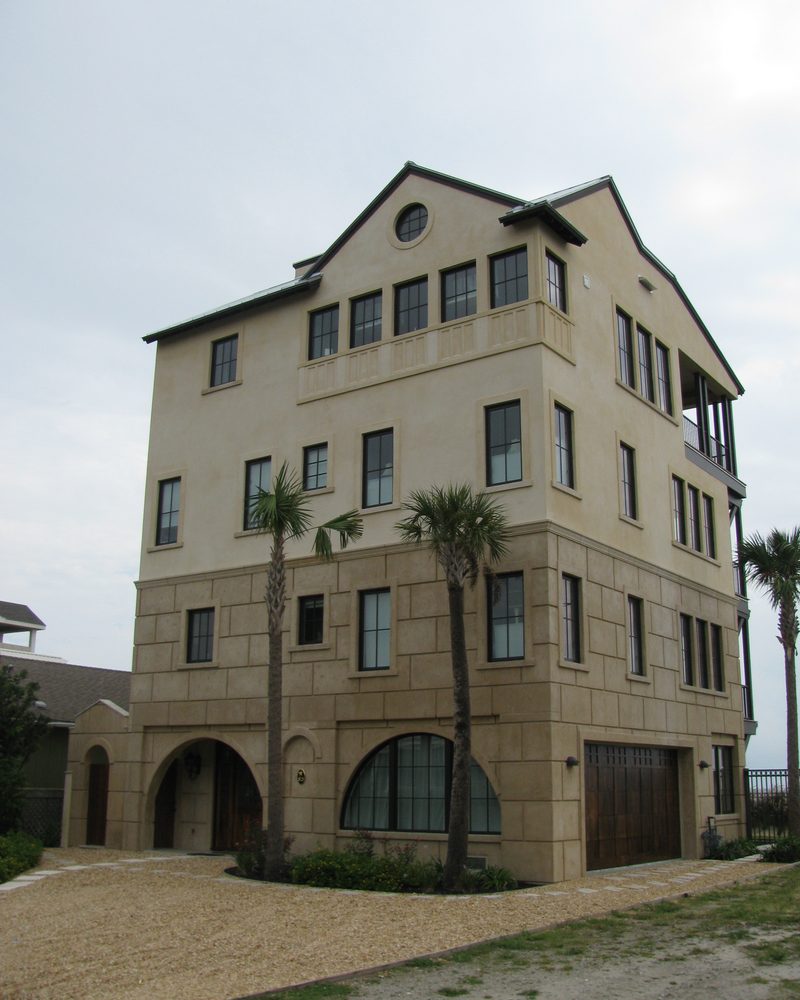
Stonecoat enhances interior or exterior wall surfaces and is suitable for interior, exterior, vertical and horizontal applications.
Arcus Plaster is the colour coat for three-coat plaster, or goes over an EIFS-type basecoat, and is often specified alongside Stonecoat where a project wants a natural product with a look compatible with cut stone.
- Finishes
- Stonecoat, Arcus Plaster, Marblecoat, Lime Plaster Fine and Lime Plaster Medium.
- Wall build-ups
- Six prep routes, each with its own guide: EIFS and other coated foam, exterior sheathing board, interior gypsum board, Portland cement plaster (three-coat stucco), CMU and brick, and poured concrete (vertical).
- Control joints
- Exterior vertical and horizontal work: maximum 6 square feet.
- Sealing
- Arcus Plaster, Marblecoat and the lime plasters: always sealed. Stonecoat: required in extreme climates — higher freeze/thaw cycling, higher or more constant UV exposure, higher altitudes, and humid, subtropical and tropical locations; strongly recommended on all other exteriors.
Fireplaces
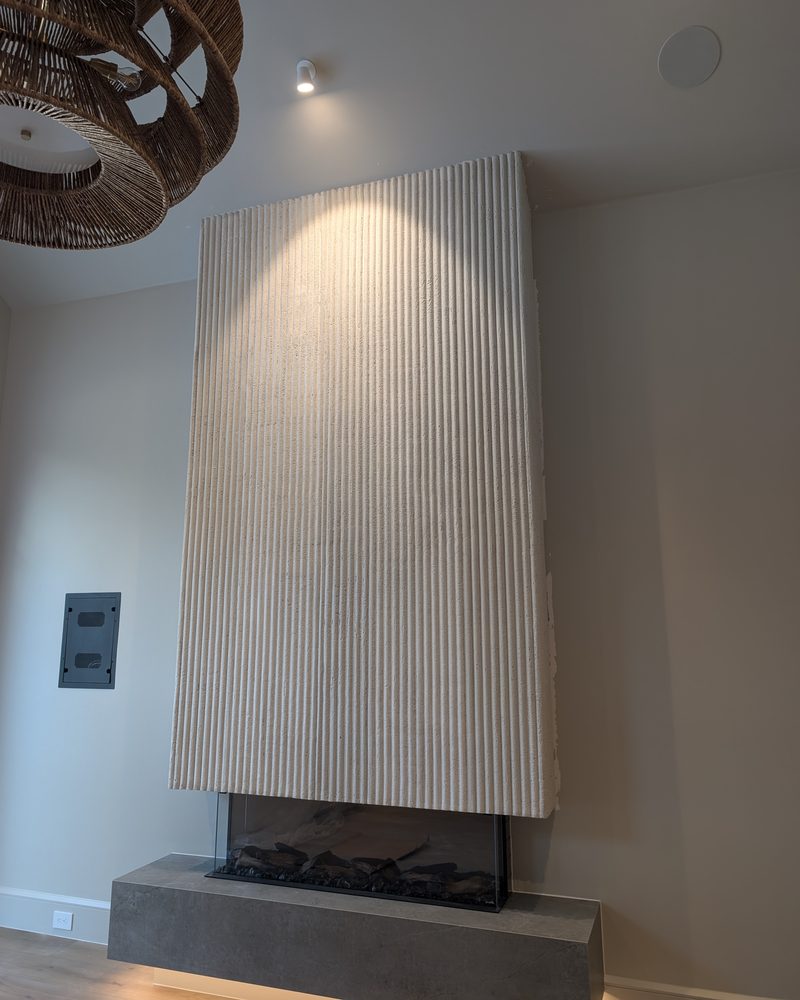
Stonecoat is used for dramatic fireplaces and is suited to casting them. Marblecoat lists fireplaces among its applications.
- Finishes
- Stonecoat · Marblecoat
- Not listed
- Arcus Plaster and the lime plasters.
- Non-combustibility
- Stonecoat and Arcus Plaster passed ASTM E136 (no burning) and returned 0 flame spread and 0 smoke developed on ASTM E84-07.
- Near the opening
- Where entirely non-combustible materials are required, the substrate becomes galvanized diamond mesh lath with a Portland cement plaster brown coat that completely covers it.
Floors
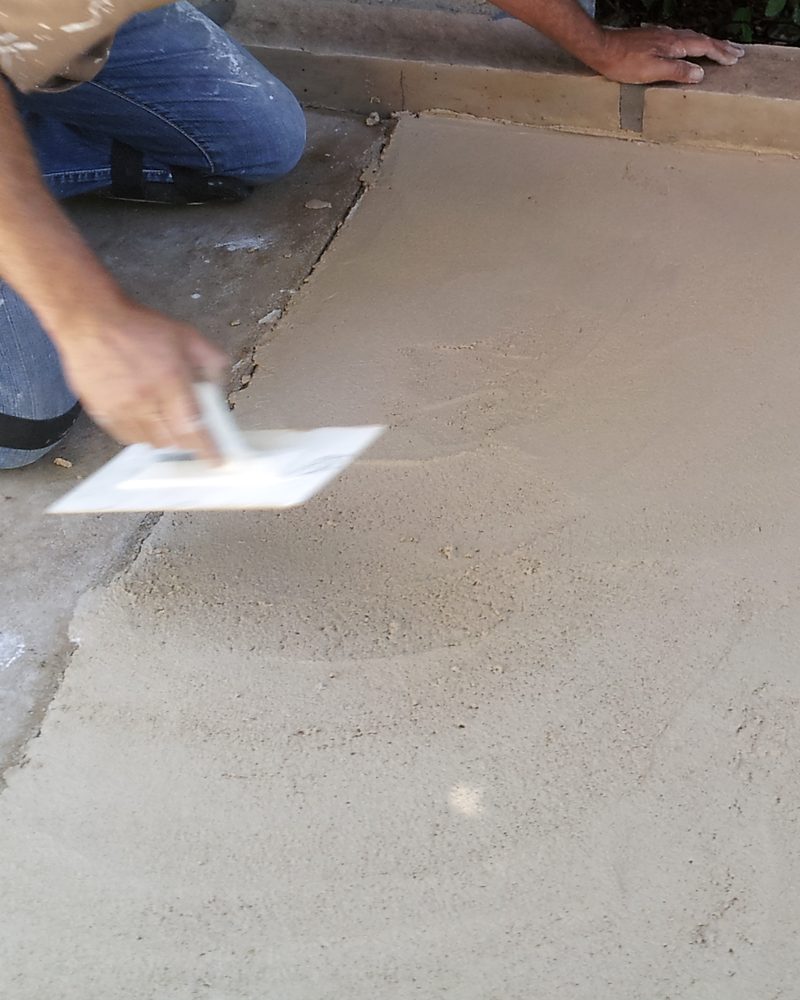
Stonecoat is hand-tooled into flooring among its decorative stone elements. Marblecoat is used for floors, and lists floors and horizontal surfaces first among its applications.
- Finishes
- Stonecoat and Marblecoat.
- Slip resistance
- Stonecoat: coefficient of friction 0.90 dry, 0.87 wet (ASTM C1028).
- Arcus Plaster
- Not suitable — it must not be used on horizontal surfaces subject to vehicular or pedestrian traffic.
- Lime plasters
- Not weight-bearing; vertical applications only.
- Control joints
- Interior horizontal: maximum 6 square feet. Exterior: maximum 6 square feet.
- Sealing
- Required on all exterior horizontal work. A commercial-grade top-coat sealer is strongly recommended for garage floors, driveways, walkways and patios.
Interior walls
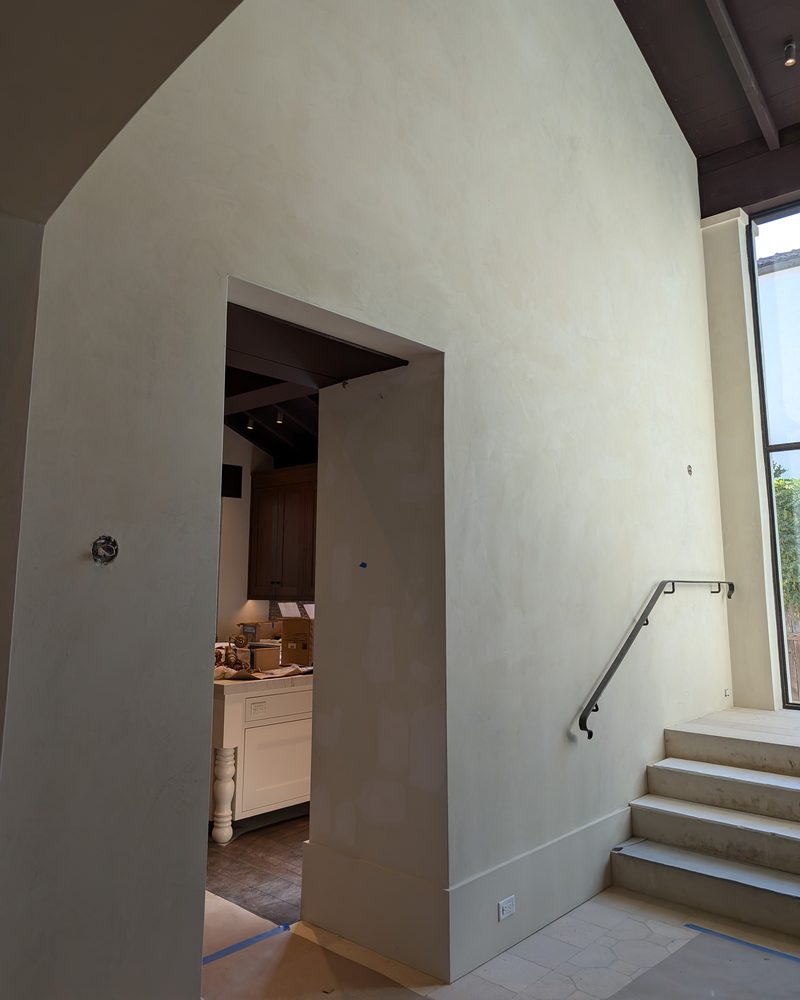
Stonecoat is used for wainscoting and countertops. Marblecoat gives the sheen of natural marble for contemporary designs, in ornamental panels, mouldings, showers and countertops.
Lime Plaster Fine gives a Venetian-style finish; Lime Plaster Medium, with a slightly larger aggregate, a Marmorino-style finish. More trowelling gives a higher polish.
- Finishes
- All five bagged finishes.
- Showers and baths
- Stonecoat and Marblecoat are suited to wet locations such as shower surrounds; the lime plasters when properly sealed.
- Arcus Plaster
- Not for wet locations such as shower surrounds.
- Countertops
- Poured-in-place or cast: Stonecoat and Marblecoat. Sealing is required.
- Control joints
- Interior vertical: maximum 25 square feet. Countertops may go without, if installed to the manufacturer's recommendations.
- Lime plasters
- Arcusstone describes them as resistant to mould and bacteria, letting a room breathe, enhancing air quality, dissipating odours, fire resistant, and sustainably produced.
Outdoor living
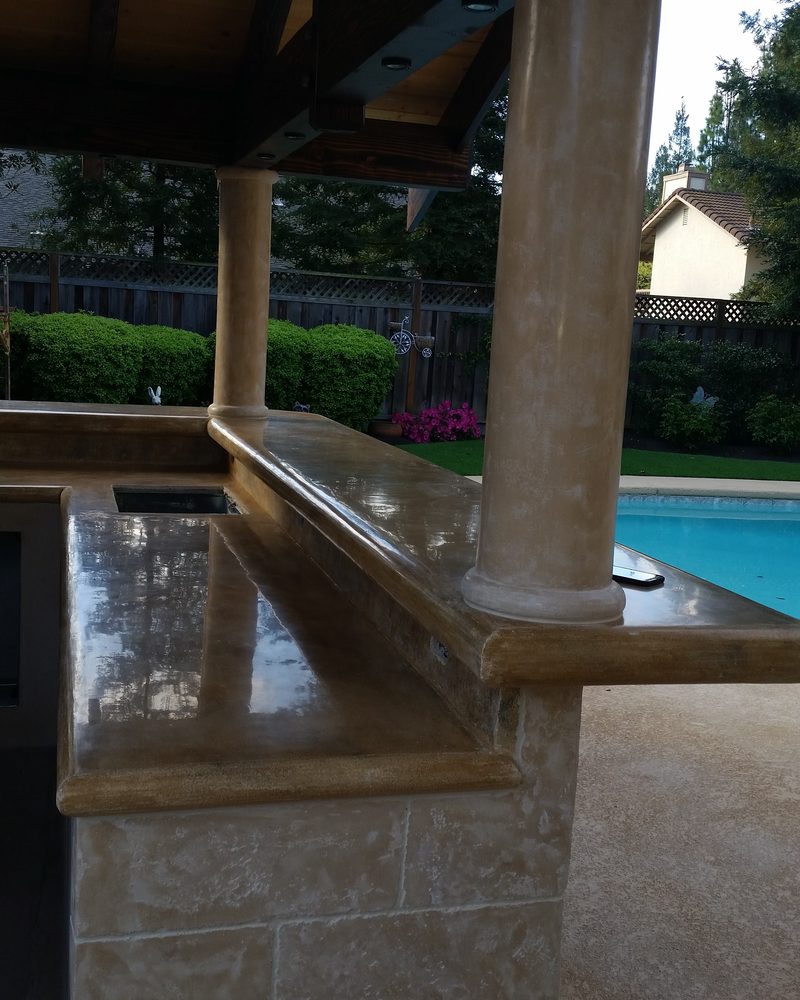
Stonecoat is used for architectural features including pool copings and fountains. Stonecoat and Marblecoat are both suitable for water features such as fountains.
Both also go on barbecue tops, garage floors, driveways, walkways and patios, and the prep guides cover retaining walls.
- Finishes
- Stonecoat · Marblecoat
- Not for
- Arcus Plaster is not for water features or wet locations; the lime plasters are exterior vertical only.
- Sealing
- Required at water features and on all exterior horizontal work; a commercial-grade top-coat is strongly recommended for barbecue tops.
- Retaining walls
- Waterproofed — on the back before backfill, or on the face with a non-asphalt material compatible with the basecoat and the finish.
Range hoods
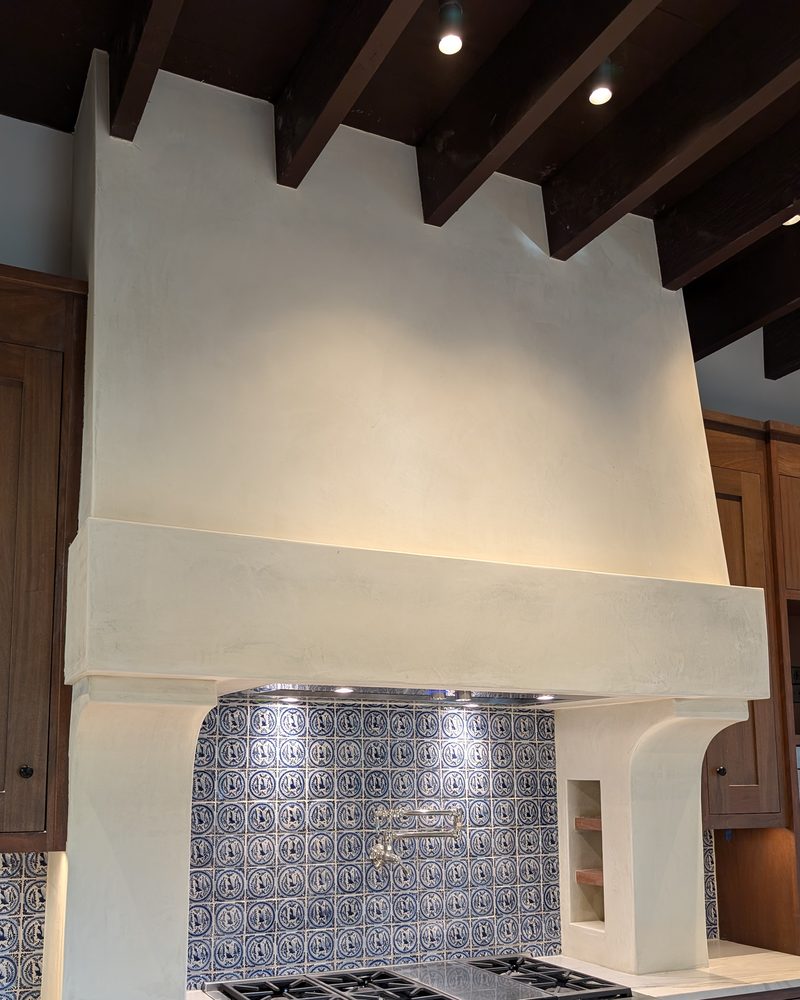
Stonecoat lists range hoods among its architectural features.
- Finishes
- Stonecoat
- Non-combustibility
- Stonecoat passed ASTM E136 (no burning) and returned 0 flame spread and 0 smoke developed on ASTM E84-07.
- Sealing
- A commercial-grade top-coat sealer is strongly recommended in kitchens, where grease and staining are expected.
Wine cellars
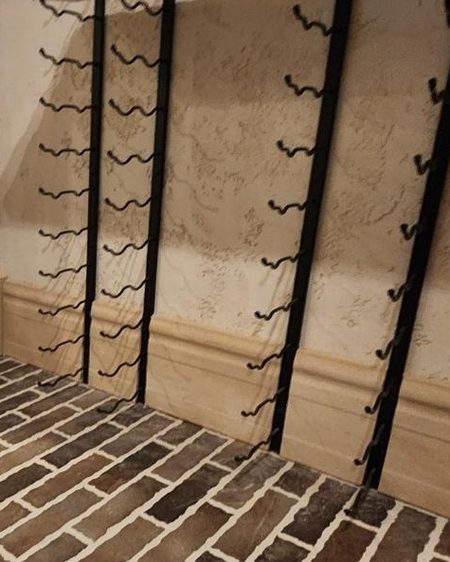
Stonecoat gives a wine cellar the look of cut stone: barrel-vaulted ceilings and block-pattern walls, applied over the cellar's own substrate.
- Finishes
- Stonecoat
- Wet locations
- Stonecoat is suitable for wet locations, where sealing is required.
Where no finish goes
These apply to every category above.
- Asphalt or other unstable substrates
- Elastomeric or acrylic EIFS finish coats
- Wood, GFRC, PVC, ABS, urethane or other plastics
- Sheet metal or steel
All five finishes accept metal lath, grounds and reglets in direct contact.
Sealing, by application
- Always sealed
- Arcus Plaster, Marblecoat, Lime Plaster Fine and Lime Plaster Medium.
- Stonecoat — required
- In wet locations, at water features, on countertops and on all exterior horizontal applications.
- Stonecoat — also required
- On exteriors in extreme climates — higher freeze/thaw cycling, higher or more constant UV exposure, higher altitudes, humid, subtropical and tropical locations.
- Top-coat
- Strongly recommended for countertops, barbecue tops, baths, kitchens, garage floors, driveways, walkways and patios, where grease and staining are expected.
- Stonecoat — other exteriors
- Strongly recommended, not required — against efflorescence in damp climates, UV fade, graffiti, caustic chemicals, and staining from acid rain, tree sap and droppings.
- The full system
- Every guarantee covers the full Arcusstone system — primer, finish and sealer together.
Before the work starts
- Mockup
- A 4 × 4-foot mockup is installed at the site and accepted by the Owner and Architect for colour, texture, pattern and workmanship, then kept for comparison through substantial completion.
- Submittals
- Samples 12 × 12 inches, showing texture and colour, are part of the specification submittal.
- Installers
- Trained applicators, who have attended the manufacturer's basic installation session and completed at least two projects of similar size and scope.
- Substitutions
- The specification permits none.
- Temperature
- Above 40 °F, and expected to stay above 40 °F for 48 hours after application.
The documents behind this page
Every condition above comes from these. Each opens as a PDF.
- Architectural specification for Arcusstone finishesPDF · 165 KBOpen the PDF: Architectural specification for Arcusstone finishes
- Specification for pre-coated EPS foam shapesPDF · 174 KBOpen the PDF: Specification for pre-coated EPS foam shapes
- Substrate prep — EIFS and other coated foamPDF · 321 KBOpen the PDF: Substrate prep — EIFS and other coated foam
- Substrate prep — exterior sheathing boardPDF · 231 KBOpen the PDF: Substrate prep — exterior sheathing board
- Substrate prep — interior gypsum boardPDF · 152 KBOpen the PDF: Substrate prep — interior gypsum board
- Substrate prep — Portland cement plasterPDF · 141 KBOpen the PDF: Substrate prep — Portland cement plaster
- Substrate prep — CMU and brickPDF · 130 KBOpen the PDF: Substrate prep — CMU and brick
- Substrate prep — poured concrete (vertical)PDF · 164 KBOpen the PDF: Substrate prep — poured concrete (vertical)
Technical details
For specifiers and applicators. The documents above carry all of it.
Control joints, panels and thickness
- Exterior
- Vertical and horizontal: maximum 6 sq ft between control joints.
- Interior vertical
- Maximum 25 sq ft.
- Interior horizontal
- Maximum 6 sq ft.
- Countertops
- No joints required if installed to the manufacturer's recommendations.
- Arcus Plaster panels
- Up to 144 sq ft, length-to-width at most 2.5 : 1.
- Specified thickness
- Stonecoat nominal 3/8 in · Arcus Plaster nominal 3/16 in
- Weight
- Stonecoat and Arcus Plaster: 1 lb/sq ft per 1/8 in of thickness, on average (ASTM C67). Stonecoat at 3/8 in: 3 lb/sq ft.
Substrates and framing
- Bonding Agent
- Required for most applications. Not used for Stonecoat over concrete on grade, over retaining walls, or on horizontal wet-location work where block-pattern joints are left without a backfill of material.
- Gypsum board
- New board is primed with two coats of standard PVA primer or one of high-quality flat latex; joints finished to Level 3.
- Movement
- On non-structural interior walls prone to movement, a fibreglass mesh and basecoat over the whole surface is highly recommended.
- Interior deflection
- L/240 non-load-bearing · L/360 load-bearing
- Exterior sheathing
- L/360 · studs at 16 in on centre maximum · 1/2 in board minimum
- Outside corners
- Reinforced with metal corner reinforcement.
- Over EIFS
- Only over the foam, mesh and basecoat — never over an acrylic, elastomeric or urethane finish coat. The basecoat is stippled with a sponge float for extra tooth.
- Tooth
- On vertical work, 30-mesh washed graded sand is broadcast into the wet Bonding Agent.
- CMU and brick
- A brown coat thick enough to stop grout joints telegraphing — typically 1/4 to 3/8 in — cured 48 hours. Cracks are repaired with 6-inch detail mesh in cementitious basecoat.
Foam shapes
- Substrate
- Flat to within 6.4 mm in a 5-foot radius; deflection no more than L/360 under code loads.
- Joints
- Expansion and control joints are carried through the shapes wherever they occur behind.
- Length
- Pre-coated pieces are recommended not to exceed 30 to 36 inches overall.
- Fastening
- Larger pieces take mechanical fastening as well as adhesive; fasteners never run through a finished surface.
- Slope
- Sills, parapets, cornices and wall caps: minimum 1/4 in per foot.
- Cure
- Minimum 14 days before shipping or installation; sealed at the facility, no sooner than 48 hours after de-moulding, casting or coating.
- On-site coated
- Sealing strongly recommended for all applications, required for all horizontal surfaces.
Test results
- Non-combustibility
- Stonecoat, Arcus Plaster: passed ASTM E136 · 0 flame spread, 0 smoke developed (ASTM E84-07)
- Slip resistance
- Stonecoat: 0.90 dry · 0.87 wet (ASTM C1028)
- Freeze/thaw
- Stonecoat, Arcus Plaster: no cracking, checking or crazing at 5× after 10 cycles (ICC-ES AC-11 §4.2)
- Water resistance
- Stonecoat, Arcus Plaster: slight colour change only; no blistering, crumbling or disintegration (ASTM D870-02)
- Vapour transmission
- Stonecoat, Arcus Plaster: 3 perms, 19 g/m² per 24 h (ASTM E96-00)
Climate
- Specification
- Above 40 °F, and expected to stay above 40 °F for 48 hours after application.
- Data sheets
- Above 40 °F and rising, below 100 °F; never on frozen or thawing substrates; sun shades and wind screens during the initial cure; not if rain is expected within 48 hours.

Bring it to your project
Arcusstone is installed through local distributors.
Bring Arcusstone to your market
Sell something real.